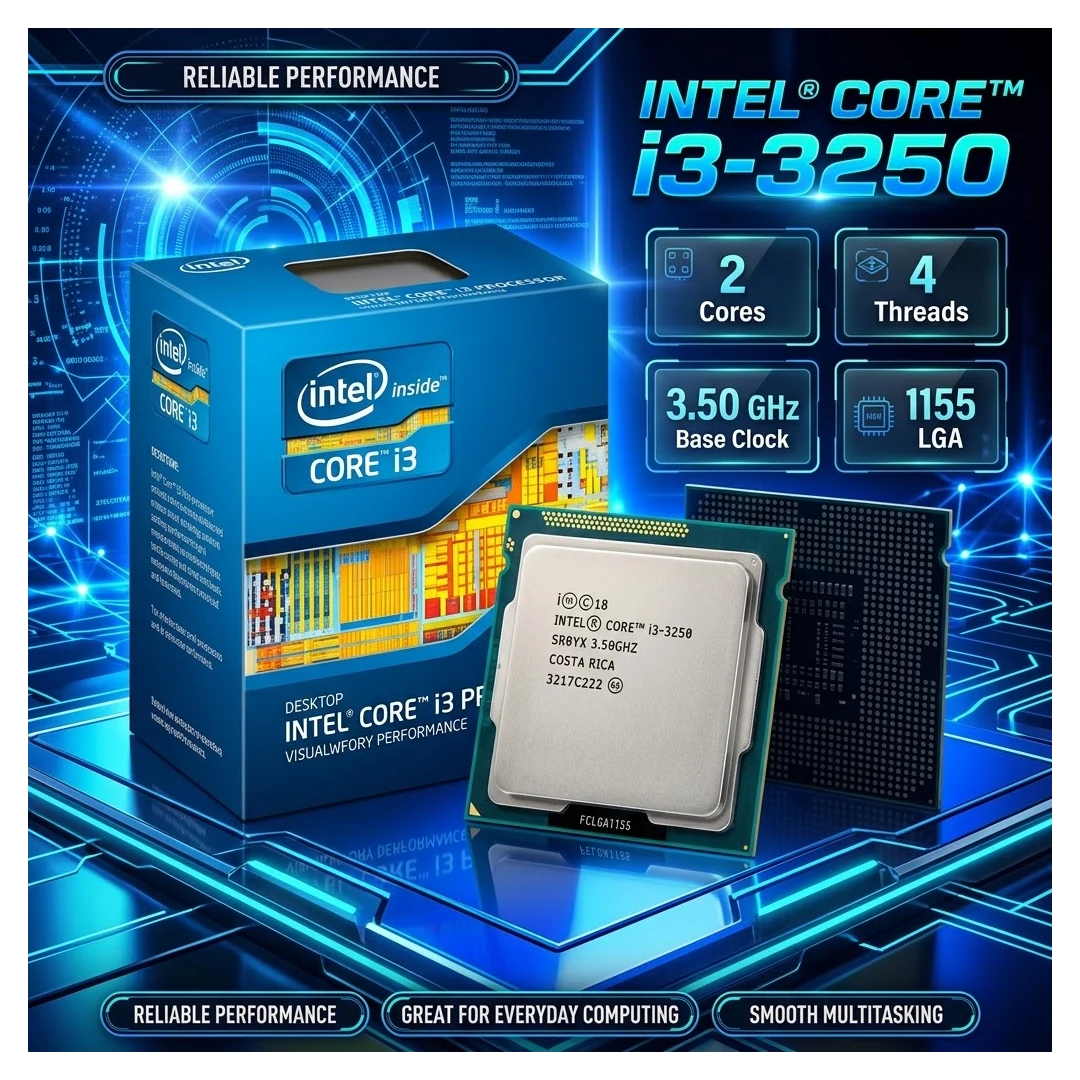
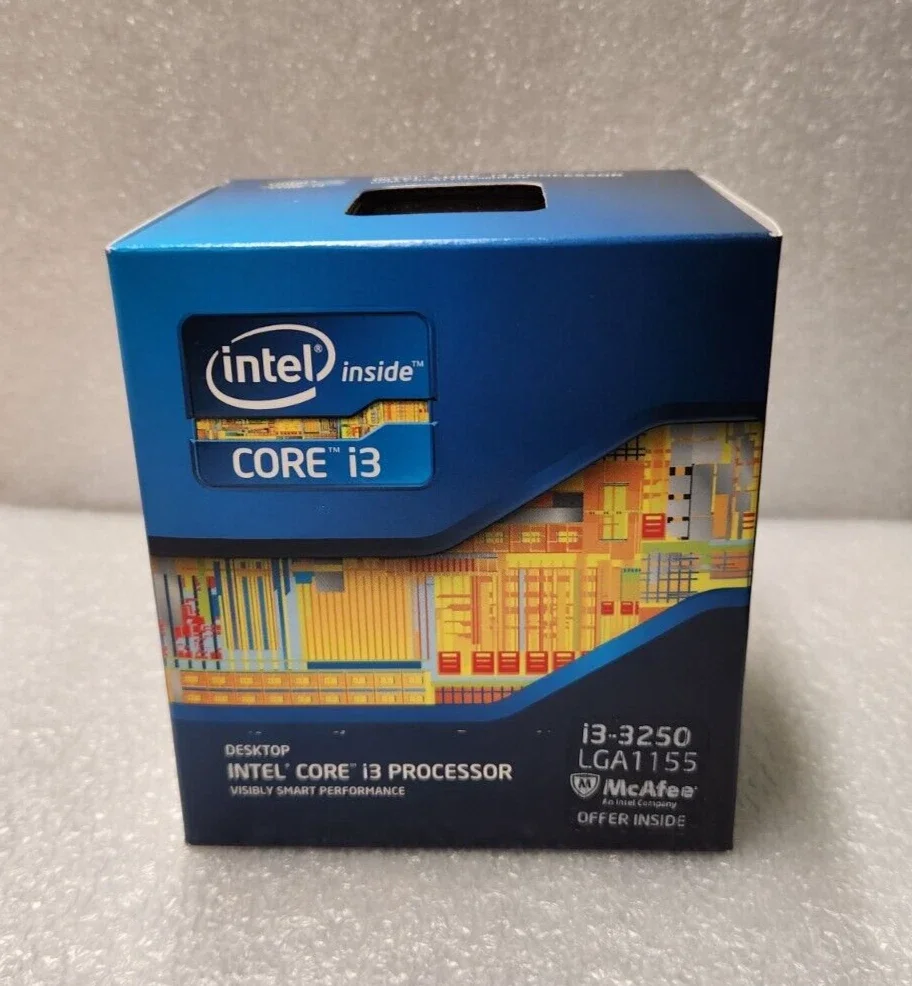
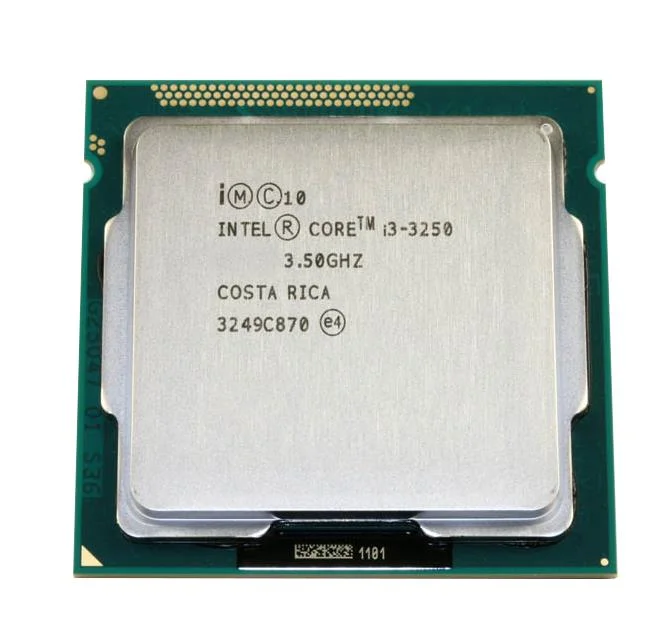
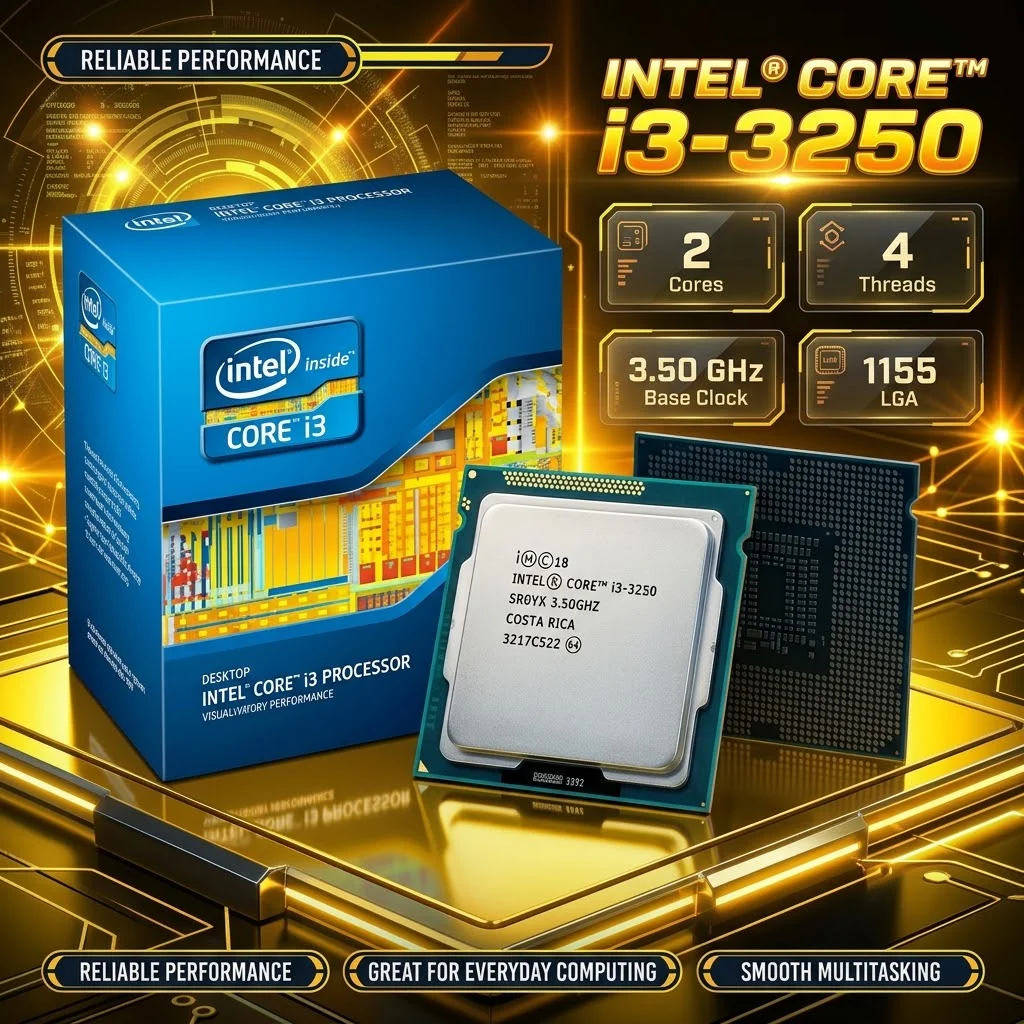
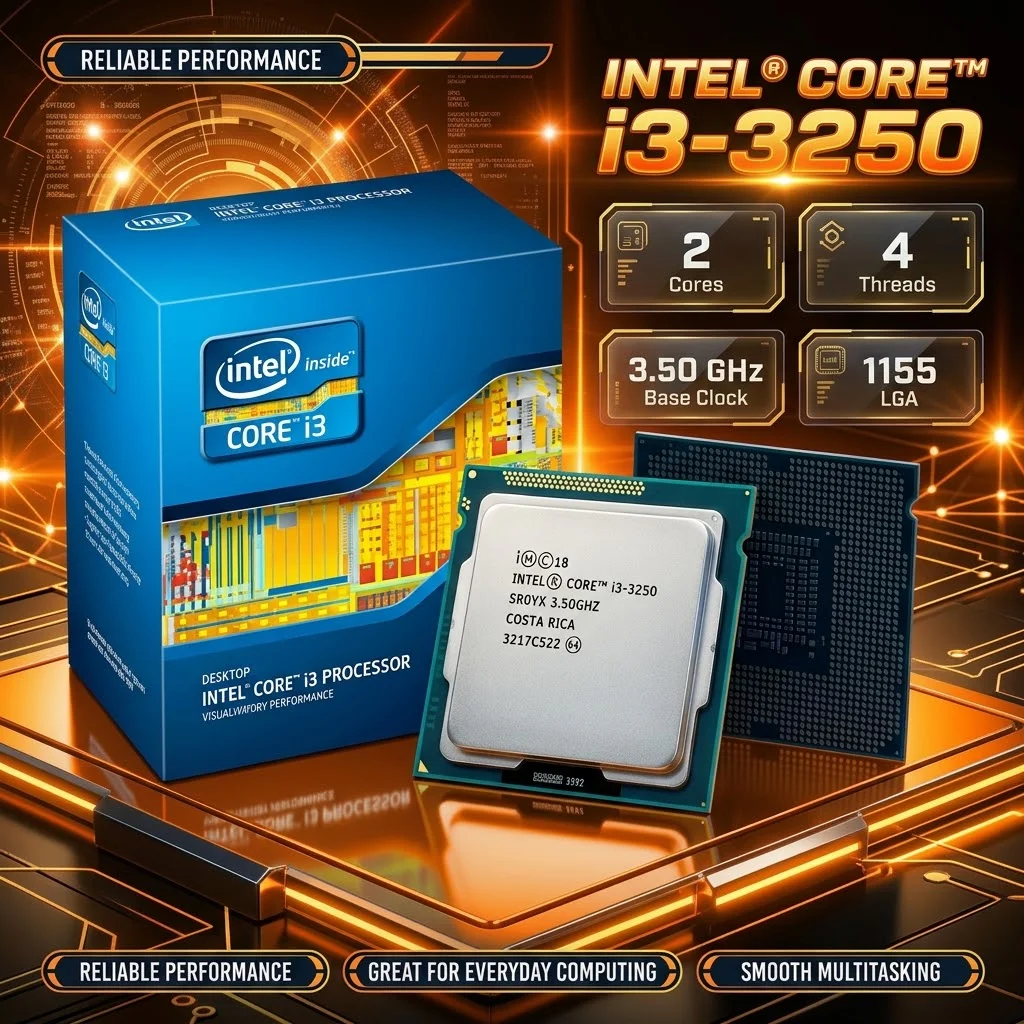
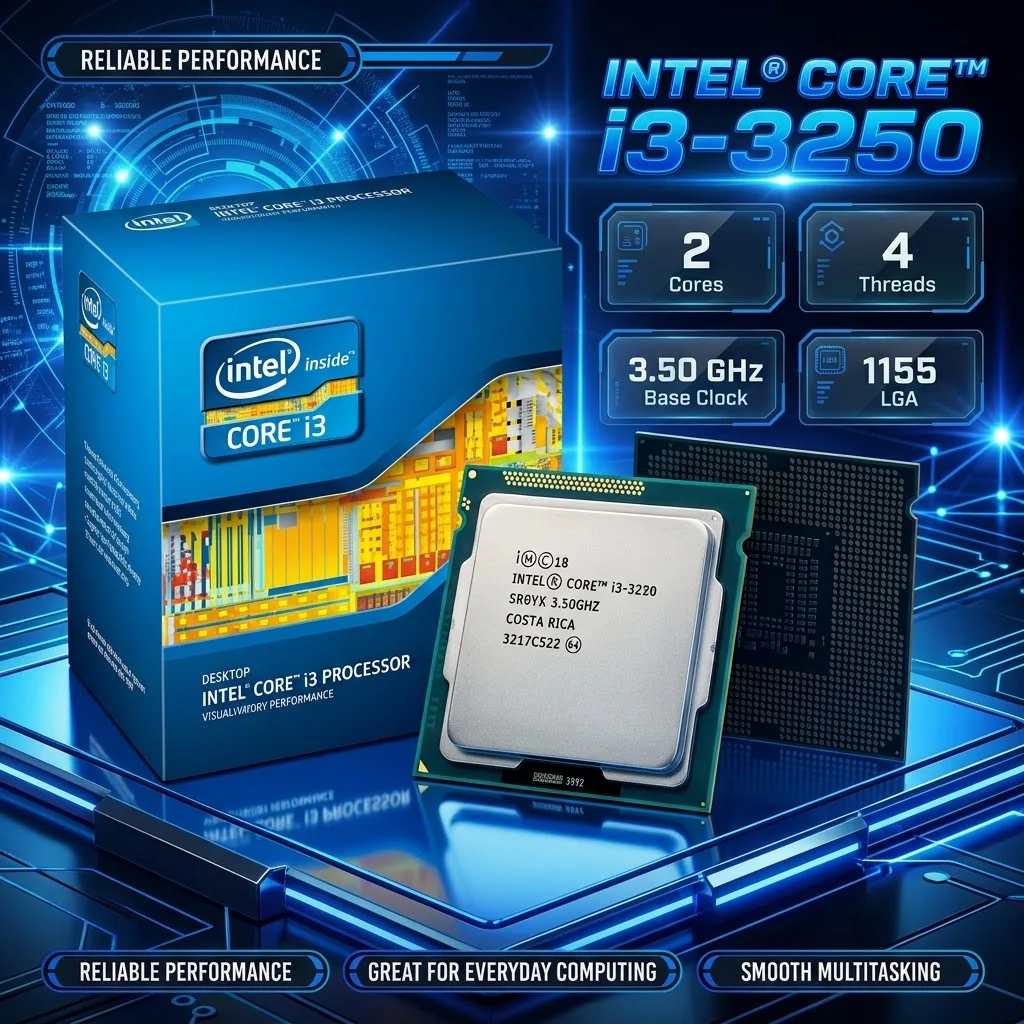
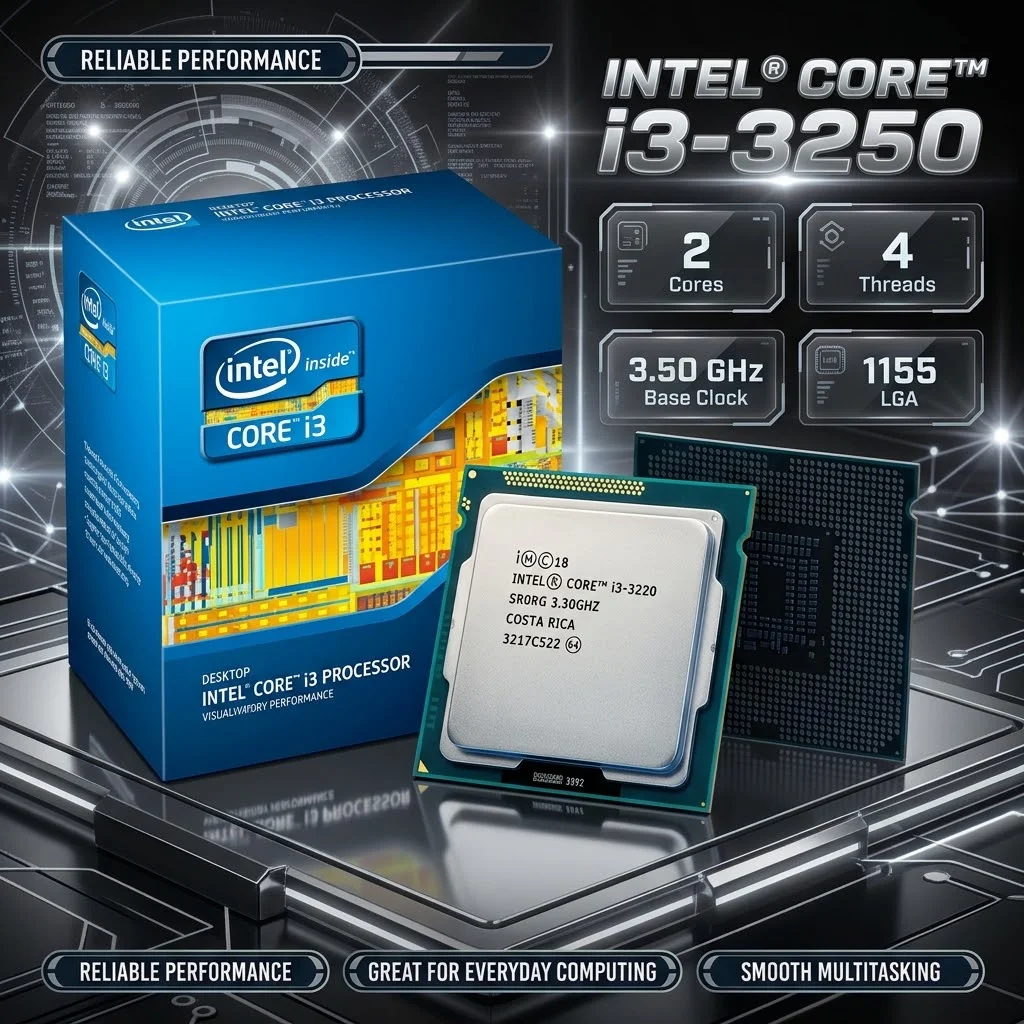
Intel Core i3-3250 3.50 GHz 2-Core, 4-Thread Desktop Processor
- Reliable Dual-Core Performance with 4 Threads
- 3.50 GHz Base Frequency for Smooth Daily Computing
- Integrated Intel HD Graphics 2500 for Everyday Visuals
- Energy-Efficient 55W TDP Design
- Supports up to 32GB DDR3 Memory
- Features Intel Hyper-Threading Technology
*Approximate regional retail guide prices. Pixahunt is an informational catalog.
CPU Benchmark Scores & Performance Analysis
TESTEDCinebench R23, Geekbench 6, PassMark CPU Mark scores & real-world gaming/office suitability tests.
Technical Specifications
Comprehensive hardware architecture and specifications
General
| Series |
Core i3
Selected Variant
|
| Model |
i3-3250
Selected Variant
|
| Cpu Cooler |
Not Included
Selected Variant
|
| Code-Name |
Ivy Bridge
Selected Variant
|
| Generation |
3rd Gen
Selected Variant
|
| Sockets Supported |
FCLGA1155
Selected Variant
|
| Release Date |
June 9, 2013
Selected Variant
|
Performance
| Base Frequency |
3.50 GHz
Selected Variant
|
| Turbo Frequency Max. |
N/A
Selected Variant
|
| Core |
2
Selected Variant
|
| Threads |
4
Selected Variant
|
| CPU Cache |
3 MB L3 Cache
Selected Variant
|
| L1 Cache |
64 KB per core
Selected Variant
|
| L2 Cache |
256 KB per core
Selected Variant
|
| L3 Cache |
3 MB
Selected Variant
|
| TDP |
55W
Selected Variant
|
| Lithography |
22 nm
Selected Variant
|
| Multiplier |
35.0x
Selected Variant
|
| Multiplier Unlocked |
No
Selected Variant
|
| Processor Type. |
Desktop Processor (2 Cores, 4 Threads)
Best for: High-Clock Budget Desktop Tasks, Office Multitasking & Web Applications Selected Variant |
Memory Support
| Memory Max. |
32 GB
Selected Variant
|
| Memory Type |
DDR3 1333/1600
Selected Variant
|
| Memory Speed |
Up to 1600 MT/s
Selected Variant
|
| Memory Channel |
2
Selected Variant
|
| Max Memory Bandwidth |
25.6 GB/s
Selected Variant
|
| ECC Memory Supported |
No
Selected Variant
|
Graphics
| Built-in GPU |
Yes
Selected Variant
|
| Processor Graphics |
Intel HD Graphics 2500
Selected Variant
|
| Graphics Base Frequency |
650 MHz
Selected Variant
|
| Graphics Dynamic Frequency |
1.05 GHz
Selected Variant
|
| Graphics Core Count |
N/A
Selected Variant
|
| Max Video Memory |
N/A
Selected Variant
|
| Max Resolution |
N/A
Selected Variant
|
Technical Info
| DirectX Support |
11
Selected Variant
|
| OpenGL Support |
4.0
Selected Variant
|
| Approx. Power Consumption |
55W
Selected Variant
|
| Compatible Products / Chipsets |
Intel 60 Series, Intel 70 Series
Selected Variant
|
| PCI Express Version |
2.0
Selected Variant
|
| PCI Express Lanes |
Up to 1x16, 2x8, 1x8 & 2x4
Selected Variant
|
| Thermal Solution (MPK / Box) |
2011C
Selected Variant
|
| Max. Operating Temperature (Tjmax) |
105°C
Selected Variant
|
Warranty
| Manufacturing Warranty |
Discontinued Product (No Active Warranty)
Selected Variant
|
Additional Info
| Specialty |
Intel Hyper-Threading Technology, Intel Virtualization Technology (VT-x)
Selected Variant
|
| Others |
64-bit Instruction Set, SSE4.1/4.2, AVX
Selected Variant
|
| Country Of Origin |
USA
Selected Variant
|
| Made in/ Assemble |
China / Malaysia
Selected Variant
|
Editorial Overview & Review
In-depth insights, architecture summary, and performance evaluation
Introduction & Overview: The Ivy Bridge Workhorse
Back in the era of 3rd Generation Intel Core processors, building a reliable, cost-effective desktop meant looking for a sweet spot between price and daily responsiveness. Enter the Intel Core i3-3250—a dual-core desktop processor built on the efficient Ivy Bridge microarchitecture. Codenamed to represent a massive leap in IPC (Instructions Per Clock) and power efficiency over its predecessor, this FCLGA1155 processor was squarely targeted at mainstream home users, budget-conscious office workers, and everyday web-surfers looking for dependable computing performance without breaking the bank.
Architecture, Performance & Key Technologies
At its core, the i3-3250 is manufactured on a refined 22nm lithography process, packing quite a punch within a modest 55W TDP (Thermal Design Power). Operating at a fixed base frequency of 3.50 GHz (with no Turbo Frequency feature available), it relies heavily on its high clock speed to breeze through single-threaded applications.
- Cores and Threads: Features 2 physical cores and 4 threads thanks to Intel's signature Hyper-Threading Technology, allowing it to handle lightly multi-threaded workloads efficiently.
- Cache: Equipped with 3 MB of L3 Cache, alongside 64 KB of L1 and 256 KB of L2 cache per core for swift data retrieval.
- Memory Support: Supports dual-channel memory configurations up to 32 GB of DDR3 RAM running at speeds up to 1600 MT/s, delivering a healthy 25.6 GB/s of maximum memory bandwidth.
- Integrated Graphics: Features onboard Intel HD Graphics 2500, operating at a base frequency of 650 MHz and scaling up to a dynamic frequency of 1.05 GHz, with support for DirectX 11 and OpenGL 4.0.
Real-World Use Cases: What Can It Handle?
While the i3-3250 lacks the raw multi-core firepower required for heavy-duty video editing or modern high-end gaming, it shines brightly in everyday scenarios. For office productivity—such as managing extensive Microsoft Excel spreadsheets, drafting documents, handling heavy email chains, and browsing the web with dozens of tabs open—the 3.50 GHz clock speed ensures snappy responsiveness.
Thanks to the integrated Intel HD Graphics 2500 and support for standard video outputs, it serves brilliantly as the brain for a home theater PC (HTPC) or a reliable media consumption station. Light eSports titles and older classic games can also run smoothly at modest settings, though modern AAA gaming will necessitate a dedicated graphics card and temper expectations.
Strengths & Potential Considerations
As a seasoned hardware reviewer, evaluating legacy silicon requires a balanced perspective on its advantages and limitations in the modern tech landscape.
- Pros: High base clock speed of 3.50 GHz for snappy single-threaded tasks; low 55W power consumption keeps thermal and electrical loads minimal; Hyper-Threading allows smooth multitasking for daily workloads; highly affordable drop-in upgrade for older Intel 60 and 70 series chipsets.
- Cons: Fixed multiplier means zero overclocking headroom; lacks a Turbo Boost feature; integrated HD Graphics 2500 is outdated for modern gaming or heavy GPU acceleration; natively limited to DDR3 memory standards; officially classified as a discontinued product with no active manufacturing warranty.
Final Buying Verdict
The Intel Core i3-3250 is a classic piece of computing history that defined mainstream efficiency during the Ivy Bridge generation. While it is no longer suited as a primary rig for modern gaming, content creation, or intensive workstation applications, it remains a fantastic, ultra-budget solution for reviving legacy FCLGA1155 motherboards. If you are tasked with building a basic office machine, a retro gaming rig, or a reliable workshop PC on a shoestring budget, this processor still has plenty of life left to give.
OUR RATING CONSENSUS
The overall rating is based on review by our experts & industry benchmark suites
Quick Snapshot
- Overall Rating
- 4.8 / 10
- Brand
- Intel
- Category
- Processor
- Catalog Model
- i3-3250
- Status
- Published
- Release Date
- June 9, 2013
Pixahunt Tech Community
Connect with hardware enthusiasts, compare benchmarks, and explore real user setups.
Explore Full Newsfeed →Related Gadgets
- 3.20 GHz Dual-Core Clock Speed for Reliable Everyday Computing
- Intel Hyper-Threading Technology Enabling 4 Parallel Threads
- Built-in Intel HD Graphics for Integrated Display Support
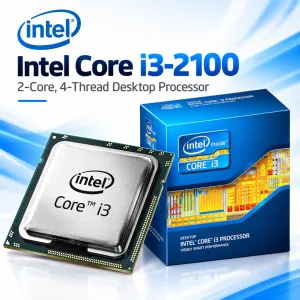
- 2 cores and 4 threads with Intel Hyper-Threading Technology
- 3.10 GHz base processor frequency
- 3 MB Intel Smart Cache
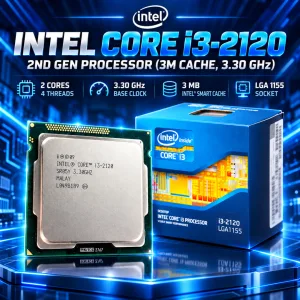
- 2 Cores and 4 Threads with Intel Hyper-Threading Technology
- 3.30 GHz Base Clock Frequency with 3 MB Intel Smart Cache
- Includes Intel HD Graphics 2000 integrated graphics
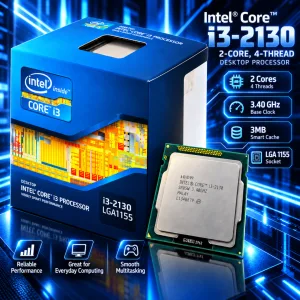
- 2 cores and 4 threads with Intel Hyper-Threading Technology
- 3.40 GHz processor base frequency with 3 MB Intel Smart Cache
- Integrated Intel HD Graphics 2000
Compare i3-3250 with Similar Processor
Real-world benchmark differences, TDP energy consumption, pros & cons, and market pricing in Bangladesh.